Street Paint: A Bold Typeface for Authentic Urban Design
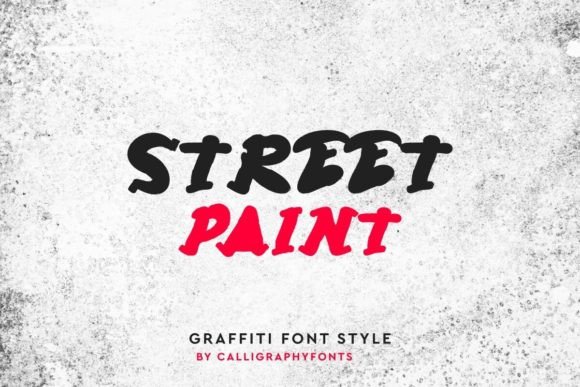
In the world of visual communication, authenticity is the ultimate currency. You can spot a generic template from a mile away, and so can your audience. When a project demands raw energy and a direct connection to street culture, you need a design asset that feels earned, not manufactured. This is precisely where Street Paint enters the conversation. Created by CalligraphyFonts, this isn't just another graffiti font; it's a carefully crafted display typeface that captures the thick, slightly spooky, and unapologetically bold character of genuine street art. Each letterform was made with intention, resulting in a powerful tool for designers who need to make an immediate and lasting impression.
The Visual Weight of Street Paint
At first glance, Street Paint commands attention. Its defining feature is a substantial, heavy weight that gives every word a powerful presence. The thick strokes feel substantial, as if applied with a loaded spray can or a wide-tip marker. This creates a sense of solidity and confidence. The "spooky" or gritty edge comes from subtle imperfections and sharp, aggressive angles, moving it far away from the playful, rounded style of many cartoonish graffiti fonts. It has a personality that's a bit rebellious, a bit mysterious, and entirely serious about its visual impact.
As a premium font, its strength lies in its role as a display font. It's not designed for setting paragraphs of body copy. Its job is to dominate headlines, logos, and titles where maximum visual hierarchy is needed. Think of it as the typographic equivalent of a lead singer's voice—it's there to be heard, not to blend into the background. When you pair it with a clean, neutral sans serif font for secondary text, you create a dynamic contrast that guides the viewer's eye exactly where you want it to go.
Where Street Paint Truly Shines
The versatility of this creative font is one of its most practical strengths. It’s a chameleon that adapts to the context of your project while maintaining its core urban identity. For entrepreneurs building a brand identity, Street Paint can be the cornerstone of a logo for a streetwear label, a skate shop, an independent record store, or a specialty coffee roaster. It instantly communicates a brand that's rooted in a specific, authentic subculture. This is a commercial font built for real-world applications.
For marketers and content creators, its applications are equally broad. It’s a natural fit for:
- Event Posters & Flyers: For music festivals, underground art shows, or urban race events, the font’s energy is infectious.
- Product Packaging & Labels: Imagine it on a hot sauce bottle, a craft beer label, or a sticker for a DIY clothing brand. It adds instant shelf appeal and attitude.
- Editorial & Publishing: Use it for chapter titles in a graphic novel, headers in a magazine spread about street art, or the title of a blog focused on urban culture.
- Digital & Social Media: Create scroll-stopping YouTube thumbnails, Instagram story headers, or website hero graphics that need to convey intensity and authenticity.
- Apparel & Merchandise: It’s practically made for screen printing on t-shirts, hoodies, and hats. The thick letterforms ensure clean, impactful prints.
It’s the kind of design asset that solves a specific problem: how to add a layer of gritty realism without resorting to clichés. Whether you're a designer working on a client project or a small business owner creating your own materials, it provides a shortcut to a powerful aesthetic.
Practical Guidance for Effective Use
Choosing the right font is a strategic decision. Before implementing Street Paint, consider the specific needs of your project. Its heavy, condensed nature means it works best at larger sizes. Test it thoroughly at the scale you intend to use it. Will it be the main logo on a website header or a small label on a product? Its legibility at small sizes may be limited, which is common for such stylized display fonts. Always prioritize clarity for your audience.
Effective font pairing is crucial. Street Paint’s strong personality means it pairs best with something understated. A simple, geometric sans serif font like Montserrat or Lato for body text creates a clean, professional balance. For a different feel, a subtle, modern serif font can add a touch of unexpected sophistication. Avoid pairing it with other highly decorative or script fonts, as this will create visual chaos and undermine readability.
One of the most practical features of Street Paint is that it is PUA encoded. This means every stylistic alternate, ligature, and special glyph is fully accessible in any design software that supports character maps. This gives you, the designer, complete control to customize the look of headlines and logos, ensuring your work feels unique and handcrafted rather than templated.
Finally, always check the licensing. As a commercial font, it comes with clear terms for use in client work, merchandise, and digital products. Understanding the license protects both you and your client and ensures you can use this powerful tool with confidence across all your projects. Street Paint is more than just a typeface; it’s a statement piece for your modern typography toolkit, ready to inject authentic, street-level energy into your next creative endeavor.