Gazelle: A Freestyle Script for Authentic Design
Finding a typeface that feels genuinely human can be a challenge in a digital world saturated with polished, geometric sans-serifs. We often look for something that breaks the grid, something that mimics the imperfections of a hand lettering session. Gazelle steps into that space as a classic and simple handwritten script, characterized by its random and freestyle nature. It is not a font that tries to replicate perfect cursive; instead, it embraces the raw, flowing movement of a pen on paper. For designers, entrepreneurs, and content creators, this distinction matters. It offers a voice that is approachable, artistic, and distinctively organic.
The Visual Personality of Gazelle
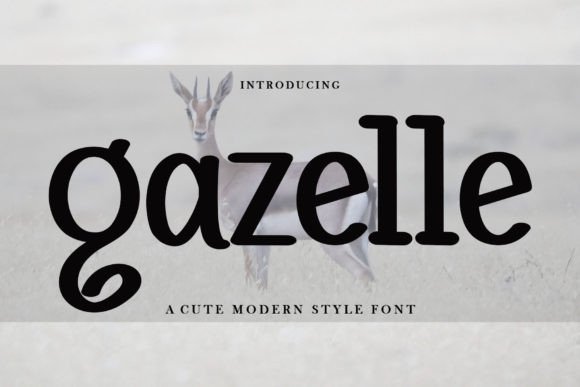
When you look at Gazelle, the first thing you notice is its rhythm. Unlike structured scripts that adhere to strict mathematical baselines, Gazelle mimics the natural bounce and variation of human handwriting. The letterforms possess a casual elegance; they are simple enough to remain legible but stylistic enough to convey personality. The connections between letters flow naturally, avoiding the stiff, mechanical joins often found in lesser script fonts.
This handwritten font bridges the gap between formal script and casual scrawl. It carries a sense of nostalgia and warmth, making it an excellent choice for projects that need to establish an immediate emotional connection with the viewer. It feels personal, as if it were written just for the reader. This makes it a powerful tool in your library of design assets, particularly when you need to soften the tone of a layout or add a layer of human touch to digital interfaces.
Strategic Applications: Where Gazelle Shines
Understanding where to deploy a script font like Gazelle is just as important as the font itself. Because of its freestyle aesthetic, it excels in environments where you want to draw attention or convey a specific mood without being overly aggressive.
Brand Identity and Logotype
For logo design, Gazelle is a strong contender for brands that want to appear approachable and authentic. It works beautifully for lifestyle brands, boutique shops, coffee roasters, or artisanal goods. A logotype set in Gazelle suggests that there is a real person behind the brand, not just a corporation. However, it is vital to ensure that the font's personality aligns with the brand's values. If your brand identity relies on high-tech precision or strict corporate minimalism, a freestyle script might send mixed signals.
Editorial and Publishing
In editorial design, such as magazine covers, book chapter headings, or comic titles, Gazelle provides a dynamic contrast to body copy set in a serif font or sans serif font. It can break up the monotony of text-heavy pages, guiding the reader's eye to pull quotes or key headlines. For YouTube thumbnails or Instagram graphics, the font's high visibility and distinct personality make it perfect for grabbing attention in a crowded feed.
Packaging and Merchandise
The apparel industry and packaging design often rely on typography to evoke a feeling instantly. Gazelle is an excellent display font for merchandise, tote bags, or t-shirt graphics. Its freestyle nature fits well with streetwear, vintage aesthetics, or bohemian styles. On packaging, it can highlight specific ingredients or product names, adding a handcrafted feel to the product experience.
Mastering Visual Hierarchy with a Script Font
One of the most common pitfalls in modern typography is the misuse of script fonts. Because Gazelle is a display font, it is designed for impact, not for extended reading. Using it for paragraphs of body copy will frustrate your audience and ruin readability.
Instead, use Gazelle to create a strong visual hierarchy. Pair it with a clean, neutral typeface. For example, using a geometric sans serif font for your subheadings and body text allows the Gazelle headlines to pop without competing for attention. This font pairing strategy ensures that your layout remains professional and legible while still retaining that creative, handmade spark.
Readability Considerations
When working with a creative font like this, you must pay close attention to tracking (letter spacing) and leading (line spacing). Handwritten fonts often require slightly more breathing room than standard typefaces to prevent the loops and swashes from colliding. Zoom out frequently to check if the word shapes are clear. If the audience struggles to read the headline, the design has failed, regardless of how beautiful the letterforms are.
Practical Implementation and Licensing
Before integrating Gazelle into your next project, a few practical checks are necessary. First, review the specific styles and weights included with the premium font. Many high-quality scripts come with alternates, ligatures, or stylistic sets that allow you to customize the look of specific letters, preventing repetitive loops that can make a design look "digital."
Second, understand the licensing. If you are a freelancer or a small business owner, ensure you have the correct commercial font license for the specific application—whether it is for a website, a physical product, or a software interface. Using a personal license for commercial work is a common mistake that can lead to legal headaches down the road.
Finally, test the font in context. Don't just look at it in a design tool; mock it up. Place the text on a photo, print it out on paper, or view it on a mobile screen. Gazelle is a versatile typeface, but its effectiveness depends on the context of your specific creative design projects