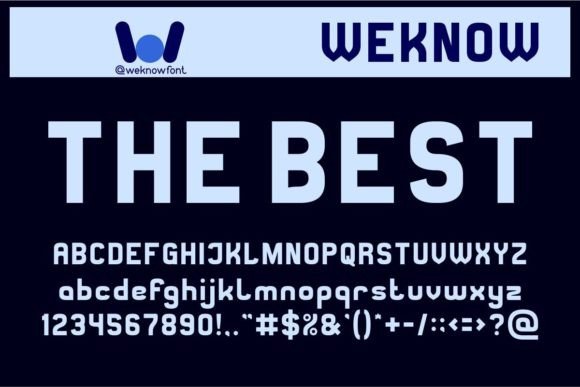
The Best: A Typeface for Bold, Modern Statements
When you're building a brand, designing a poster, or crafting a YouTube thumbnail, the font you choose does more than just display words. It sets a tone, communicates a feeling, and makes a silent promise to your audience. The Best is a basic sans-serif display font engineered for exactly that kind of impact. It’s not trying to be the most intricate or decorative typeface in your library. Instead, it aims to be the most reliable workhorse for projects that demand clarity, modernity, and a confident visual presence.
Visual Character and Personality
At its core, The Best is a clean, geometric sans-serif. Its letterforms are built on simple, balanced shapes with consistent stroke widths. This gives it a neutral yet contemporary personality—friendly without being childish, professional without being stiff. The open counters and generous spacing contribute to excellent legibility, even at smaller sizes or from a distance, which is critical for everything from apparel tags to website hero sections.
Think of it as the reliable foundation of a brand identity. It doesn’t scream for attention with swashes or ligatures, but its steady, unassuming presence allows other design elements—like your logo mark, color palette, or imagery—to shine. Its style leans towards modern typography, making it a natural fit for tech startups, lifestyle brands, editorial layouts, and any project that wants to feel current and approachable.
Where The Best Truly Excels
The versatility of a display font like The Best is its greatest strength. It’s designed to be a headline grabber, but its clean lines ensure it remains functional across a surprising range of applications. Let's break down where it can become an invaluable part of your design assets.
Logo and Logotype Design: For a logo design, especially for a wordmark, the clarity of The Best is a major asset. It ensures your brand name is instantly recognizable and scalable from a tiny favicon to a massive billboard. Its neutrality allows it to pair beautifully with a serif font for contrast or a script font for a touch of elegance in secondary text.
Digital Presence: In the fast-scrolling world of social media, a font needs to capture attention in a split second. The Best is perfect for bold social media graphics, Instagram story overlays, and YouTube thumbnails. Its high legibility translates perfectly to web design, where it can be used for impactful headings, navigation menus, and call-to-action buttons that stand out without causing visual fatigue.
Print and Editorial Work: Don't let the "display" label fool you. A well-crafted sans serif font like this is a staple in editorial design. Use it for magazine cover lines, chapter headings in a book, or the title treatment on a poster. Its consistent rhythm makes it excellent for creating strong visual hierarchy, guiding the reader's eye from the main headline to subheadings and supporting text.
Branding and Commercial Applications: From packaging design for a new product to the signage for a brick-and-mortar store, The Best provides a cohesive look. Its professional feel helps build brand recognition and trust. For entrepreneurs and small business owners, it’s a smart choice for business cards, invoices, and presentation decks that need to look polished and unified.
Making It Work: Practical Guidance
Choosing the right premium font is a practical decision. Here’s how to evaluate and implement The Best in your projects.
Evaluate the Project Fit: First, define your project's goal. Is it to feel innovative and clean? Trustworthy and straightforward? The Best excels in contexts where modernity and clarity are paramount. If your project requires a deeply historical, whimsical, or ornate feel, you might look elsewhere. But for a vast majority of contemporary needs—from a mobile app interface to a corporate report—it’s a strong contender.
Test Font Pairings: A single font family can feel monotonous. The real magic often happens in combination. Try pairing The Best with a contrasting typeface. For example:
- Use The Best for all headlines and pair it with a classic, readable serif font for body text in a blog or magazine.
- Combine it with a subtle handwritten font for accent text in a wedding invitation design or a lifestyle brand's lookbook to add a personal touch.
- For a tech-focused brand, pair it with a monospaced font for code snippets or data labels to create a cohesive, modern system.
Review the Included Styles: A robust commercial font often comes with multiple weights and styles (like Light, Regular, Medium, Bold, and possibly italics). These variations are not just decorative; they are tools for design. Use a heavier weight for maximum impact in a headline, and a lighter weight for elegant subheadings. This creates rhythm and hierarchy without introducing a new font family, ensuring your brand identity remains consistent.
Consider Readability and Licensing: Always test readability. Type out a paragraph in the font and view it at the intended size—on a mobile screen, on a printed product mockup, from across a room. Ensure the characters are distinct and the spacing feels comfortable. Finally, understand the license. If you're using it for a client's logo, merchandise, or a large-scale campaign, verify that the license covers commercial use. This is a non-negotiable step for any professional project.
In the end, The Best is a tool. Its value lies not in being the flashiest creative font available, but in its ability to provide a solid, adaptable, and professional foundation for your visual communication. It’s the kind of typeface you’ll find yourself reaching for again and again because it simply works, allowing your ideas and your message to take center stage.