Octa Brain: The Sci-Fi Sans Serif Font for Bold Projects
Certain projects demand a typeface that doesn't just sit quietly on the page but actively contributes to the narrative. When you're designing for a tech startup, a gaming convention, or a music festival with a retro-futuristic vibe, you need a font with a distinct point of view. This is where a display font like Octa Brain comes into play. It’s not your standard workhorse serif font or a neutral sans serif font; it’s a sci-fi sans serif font built for high-impact visuals.
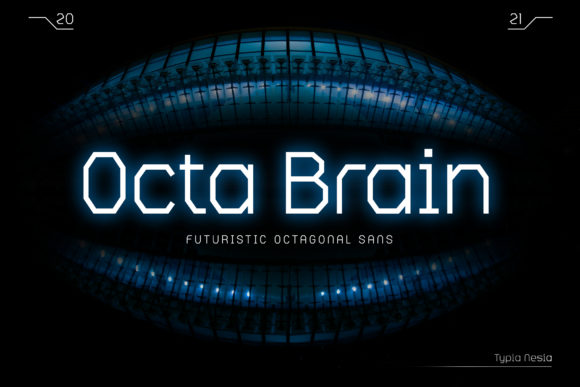
At its core, Octa Brain draws inspiration from the geometric aesthetics of 1980s science fiction and arcade culture. However, it refrains from looking dated. The letterforms feature sharp, angular cuts and distinctive geometric shapes that feel both nostalgic and forward-thinking. You will notice unique terminals on letters like 'c' and 's', along with a monolinear weight that ensures consistency across words. This gives the typeface a mechanical, digital personality without sacrificing the legibility required for short bursts of text. It strikes a balance between being a creative font and a functional tool for modern typography.
Visual Identity and Aesthetic Appeal
The strength of Octa Brain lies in its ability to command attention. In the realm of display fonts, character is king. This font utilizes open apertures and slightly squared curves, which gives it a technical, engineered feel. It avoids the coldness of industrial fonts by incorporating subtle quirks in its geometry. This makes it an excellent choice for logo design, where a brand needs to appear innovative, stable, and distinctive all at once.
Unlike a script font or handwritten font, which conveys intimacy and personal touch, Octa Brain communicates authority and modernism. It works exceptionally well for headers in editorial design or as the primary typeface on book and cover titles within the thriller, sci-fi, or technology genres. The visual weight of the font ensures that headlines pop, making it a valuable asset in your library of design assets.
Practical Applications Across Industries
One of the most common mistakes designers make is choosing a font based solely on aesthetics without considering the medium. Octa Brain is versatile, but it excels in specific environments. Because of its geometric clarity, it is a powerhouse for digital design. You can use it for web design headers, social media graphics, and UI elements where quick scanning is necessary. It renders beautifully on high-resolution screens, maintaining its crisp edges even at smaller sizes in digital environments.
For print and physical products, the applications are just as broad. Consider using Octa Brain for:
- Sport Design: The angular nature of the font mimics speed and movement, making it perfect for team logos, jerseys, and event posters.
- Music Posters: Whether it is an EDM festival or a synth-wave album cover, the font captures the energy of the sound.
- Packaging Design: For products in the tech, energy drink, or gaming sectors, Octa Brain helps the product stand out on crowded shelves.
- Stationery Design: It adds a modern, edgy twist to business cards and letterheads, particularly for creative agencies.
Furthermore, don't overlook its potential in home decor. Large-scale typography art featuring motivational quotes or abstract phrases looks striking when set in Octa Brain. The font's structure holds up well when scaled to large dimensions, ensuring that wall art remains readable and impactful from a distance.
Strategic Font Pairing and Readability
A premium font like Octa Brain rarely works in isolation. The key to professional modern typography is effective font pairing. Because Octa Brain has a strong personality, it pairs best with neutral companions. You want to create a visual hierarchy that guides the reader's eye without causing visual noise.
Try pairing Octa Brain with a clean, humanist sans serif font for body copy. Fonts like Roboto, Open Sans, or Lato provide a calm reading experience that contrasts well with the geometric intensity of the headlines. Alternatively, if you are going for a high-fashion or luxury tech aesthetic, pairing it with a classic serif font can create a sophisticated tension between old and new.
Regarding readability, it is crucial to treat Octa Brain as a display font. This means it is optimized for large sizes, such as titles and headers. While you might be tempted to use it for body text in a brochure or on a website, resist that urge. The distinct geometric features that make it great for logos can become tiring to read in long paragraphs. Stick to using it for the "big picture" elements—titles, sub-headers, pull quotes, and call-to-action buttons—to maintain the professionalism of your brand identity.
Evaluating Fit and Commercial Use
Before integrating any new typeface into your workflow, you must evaluate the licensing. Octa Brain is a commercial font, which usually implies a specific set of rights regarding where and how you can use it. Whether you are using it for a client's logo design, a run of merchandise, or web design, ensure your license covers the intended usage.
When testing the font for a project, do not just type out the alphabet. Test it with the specific words and phrases you intend to use. For example, if you are designing a card invitation for a tech-themed event, see how the ligatures and kerning handle the event title. Check the availability of different weights or styles within the font family; having a bold or extended version can be incredibly useful for creating depth in your editorial design.
Ultimately, choosing a font is about aligning visual language with brand goals. If your project aims to evoke innovation, speed, or a retro-futuristic atmosphere, Octa Brain is a strong contender. It moves beyond basic text to become a central design element, helping to build a brand identity that is recognizable, professional, and memorable. By applying it thoughtfully to the right projects, you elevate the work from simple layout to compelling visual storytelling.