Tech: Merging Anatomy with Hyper-Advanced Machinery
The Anatomy of a Cybernetic Typeface
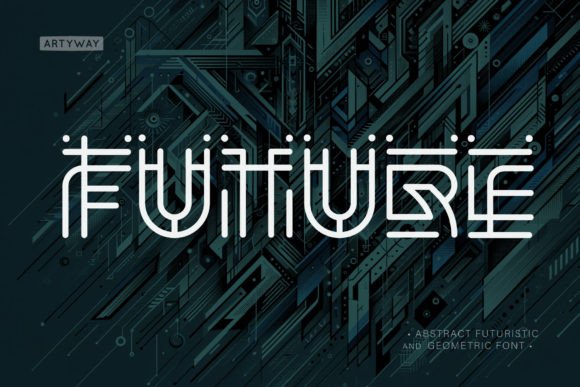
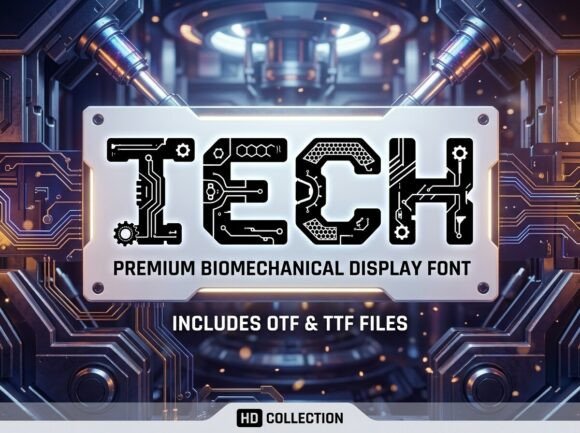
When you first encounter Tech, you aren’t just looking at a font; you are examining a blueprint for the future. It is rare to find a premium font that manages to blend human anatomy with cold, hyper-advanced machinery, but this display font does exactly that. It is designed specifically for those moments when a standard sans serif font or a delicate script font simply won’t command the room. Instead of simple vector shapes, Tech constructs its bold, mechanical block letterforms out of complex cybernetic structures. If you look closely, the negative space is just as important as the strokes, filled with an intricate network of electrical circuit boards, hardware microchips, and technical gears.
This typeface doesn't try to mimic handwriting or traditional calligraphy. It embraces modern typography at its most industrial level. The geometric plating and visible "wiring" within each character create a texture that feels tactile. It bridges the gap between the organic flow of text and the rigid efficiency of industrial hardware. For designers working on sci-fi video game headers or cyberpunk-themed branding, this creative font offers an immediate visual shorthand for technology, power, and complexity. It transforms standard text into a technical component of your layout, providing a gritty, unyielding edge that demands attention.
Strategic Applications: Where Cybernetics Meet Design
Understanding where to deploy a heavy-hitter like Tech is crucial for maintaining visual hierarchy. Because of its intricate internal detailing, this is not a typeface for body copy or long-form editorial design. Attempting to read a paragraph set in Tech at 10pt would be exhausting for the eye. Instead, treat it as the architectural foundation of your headers. It is the ideal choice for large-scale applications where the letterforms can breathe and reveal their internal mechanical details.
Consider the realm of brand identity. A tech startup looking to disrupt the AI or robotics sector could use Tech for their logo design. It immediately signals that the company is forward-thinking and mechanically precise. Similarly, in packaging design for computer hardware—like graphics cards or cooling systems—this font speaks the consumer's language fluently. It validates the product's engineering before the customer even reads the specs. Beyond commercial use, this commercial font is a powerhouse for entertainment branding. Think about electronic music festival titles or virtual streamer overlays; the aesthetic of Tech aligns perfectly with neon lights, dark backgrounds, and high-energy digital environments.
Mastering the Machine: Readability and Pairing
One of the most common questions regarding highly stylized display fonts is how to handle readability. With Tech, the answer lies in context and scale. At large sizes, the "machinery" inside the letters creates a fascinating texture that draws the viewer in. However, at small sizes, those details can turn to mud. Therefore, the best practice is to use Tech for impact—headers, sub-headers, and pull quotes—while relying on a cleaner typeface for the heavy lifting.
This brings us to font pairing. To let Tech shine, you need a partner that knows when to step back. A clean, geometric sans serif font is often the perfect companion. The simplicity of the body text will contrast with the complexity of the headers, creating a dynamic visual hierarchy. Alternatively, a simple serif font can add a touch of traditional professionalism to balance the futuristic vibe of the headers. Avoid pairing it with other decorative fonts or handwritten fonts; the clash of styles will confuse the viewer and dilute your brand identity.
Technical Specifications and Licensing
Before integrating Tech into your next project, it is vital to review the technical details. As a premium font, it usually comes with specific styles or weights. Check if the version you are purchasing includes alternates or special glyphs that can enhance your design. Often, cybernetic typefaces include variations of "A" or "R" that allow for tighter kerning or unique stylistic flourishes.
Furthermore, understanding the licensing is non-negotiable for professional use. If you are a small business owner using the font for a local campaign, a desktop license might suffice. However, if you are a content creator or blogger planning to use it on a high-traffic website via web design integration, you will likely need a webfont license. For social media graphics or video production, ensure your license covers digital distribution. Treating your design assets with legal diligence protects your business and respects the typographers who craft these intricate tools. Tech is an investment in your project's visual language; ensuring it is legally sound is the final step in professional implementation.