Protein: The Quiet Workhorse for Modern Branding
When you're building a brand, you often look for fonts that shout. You want something with flair, something that immediately grabs attention. But sometimes, the most powerful choice is the one that doesn't scream for attention but rather commands it through sheer clarity and confidence. That’s where Protein comes in. It’s a basic sans serif typeface, but "basic" in this context means foundational, reliable, and incredibly versatile. It’s the design equivalent of a perfectly tailored white t-shirt—simple, timeless, and fits almost everywhere.
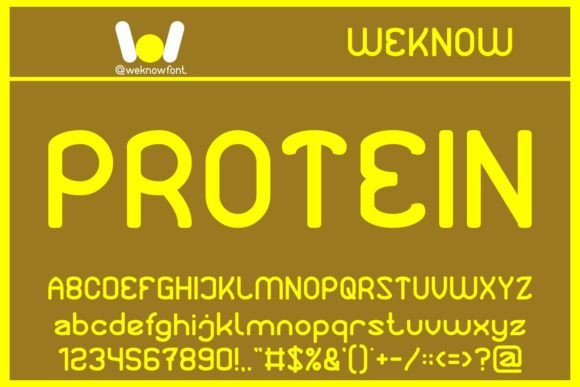
Visually, Protein is clean and structured. It doesn't have the quirky, uneven edges of a handwritten font or the decorative serifs of a classic book typeface. Instead, it offers clear letterforms, consistent stroke widths, and excellent spacing. This isn't a display font designed to be the star of the show on its own; it’s the anchor. It brings a sense of modern professionalism to any layout without feeling sterile or cold. It feels approachable yet authoritative, making it a solid premium font choice for creators who need reliability.
Where Protein Truly Shines: From Logos to Digital Platforms
The strength of Protein lies in its adaptability. Because it is so legible and neutral, it acts as a perfect canvas for other design elements.
- Logo Design and Brand Identity: If you are designing a logo for a tech startup, a fitness brand, or a minimalist clothing line, Protein provides the stability you need. It ensures your brand name is readable on a business card and recognizable on a billboard. It supports brand identity by not competing with your iconography.
- Digital and Web Design: On screens, readability is king. Protein excels in web design for navigation menus, headers, and body text. It renders beautifully on mobile devices, ensuring your message isn't lost in pixelation or poor anti-aliasing.
- Social Media and Content Creation: For YouTube thumbnails, Instagram stories, or blog graphics, you need text that pops instantly. Protein allows you to overlay text on busy photos without it becoming a jumbled mess. It’s a go-to creative font for social media graphics because it stays legible against complex backgrounds.
- Editorial and Packaging: In magazine layouts or packaging design, Protein works well for captions, ingredient lists, and technical specifications. It pairs wonderfully with a stylized serif or a bold script font for headlines, handling the "heavy lifting" of information delivery.
Strategic Pairing and Project Evaluation
Using a sans serif font like Protein effectively requires a bit of strategy. It’s rarely about using the font in isolation; it’s about how it interacts with your other design assets.
When considering font pairing, think about contrast. Because Protein is geometric and clean, it pairs beautifully with organic, flowing fonts. Try combining it with a script font for a wedding invitation to balance elegance with readability. Alternatively, pair it with a heavy, bold serif for a music poster to create a dynamic visual hierarchy. The sans serif keeps the details grounded while the headline font grabs the eye.
Before you commit to Protein for a commercial project, run a few tests. Check the included styles—does it have the weights you need? A good typeface family usually offers Light, Regular, Bold, and Italic variations. You need these variations to create emphasis without switching fonts constantly. Also, consider the licensing. If you are using this for a client's apparel industry merchandise or a large-scale print run, ensure you have the appropriate commercial license. A commercial font usage right protects both you and your client from legal headaches down the road.
Ultimately, Protein is a tool for professionals who value clarity. It’s for the entrepreneur who needs their website to look trustworthy, the designer who needs a modern typography solution that won’t go out of style next year, and the publisher who needs text that doesn't fatigue the reader's eyes. It may be "basic," but in a world of visual noise, the ability to communicate simply and effectively is the most advanced skill of all.