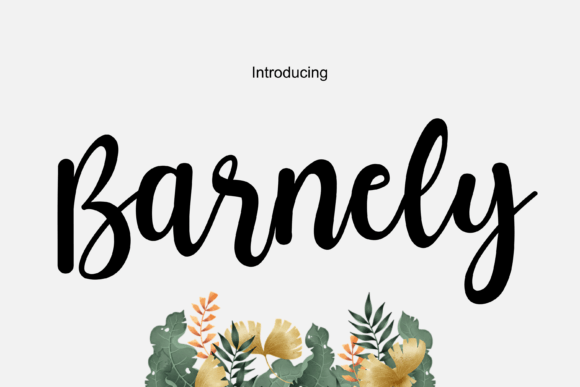
Barnely: The Fresh Handwritten Font for Modern Brands
There’s a certain kind of design project that calls for something more than clean lines and geometric precision. It needs warmth, personality, and an immediate sense of human touch. This is where a font like Barnely steps in. At its core, Barnely is a casual and fresh handwritten font designed to feel approachable and authentic. It’s not trying to mimic ancient calligraphy or overly stylized brushwork. Instead, it captures the natural, slightly imperfect rhythm of someone’s everyday handwriting, but with the polish and consistency of a professional typeface.
Visually, Barnely strikes a compelling balance. The letterforms are fluid and connected, giving it the flow of a script font, but with a relaxed, legible quality that avoids the extremes of formal cursive. You’ll notice gentle variations in stroke weight and baseline alignment—subtle details that prevent it from looking sterile or mechanically produced. This personality makes it incredibly versatile. It can feel friendly and informal for a social media graphic, yet stylish and intentional for a boutique product label. The overall aesthetic is modern, clean, and decidedly contemporary, making it a fitting choice for current design trends that favor authenticity and approachability over rigid formality.
Where Barnely Truly Shines: Real-World Applications
The strength of a creative font like Barnely isn’t just in how it looks, but in where it works. Its casual elegance makes it a natural fit for projects that aim to connect on a personal level. Think of brand identity for small businesses, especially those in lifestyle, wellness, food, or artisanal sectors. A coffee roaster, a handmade skincare line, or a local bakery could use Barnely for their logo, packaging, and menus to instantly convey craft and care. It becomes part of their visual story, signaling that there’s a person behind the product.
In the digital space, Barnely excels as a display font for web design and social media graphics. Use it for impactful headlines, call-to-action buttons, or featured quotes to break the monotony of standard sans-serif fonts. Its readability at larger sizes makes it perfect for pulling a viewer’s eye in. For bloggers and content creators, it can add a distinctive touch to Pinterest pins, Instagram stories, or YouTube thumbnails, helping content stand out in a crowded feed. The font’s friendly character can also enhance user experience in areas like email opt-in forms or testimonial sections, making the interaction feel more personal.
Beyond digital, its applications are equally robust. In editorial design, such as magazine layouts or book covers, Barnely can be used for chapter titles, pull quotes, or subheadings to add visual interest and a modern sensibility. For packaging design, it can communicate key product attributes—organic, homemade, artisanal—through typography alone. Even in personal projects, like wedding invitations, greeting cards, or scrapbooking, Barnely provides a polished yet heartfelt aesthetic that generic script fonts often lack.
Integrating Barnely: Practical Design Considerations
Choosing a font is a strategic decision. When evaluating if Barnely is the right fit, consider the project’s voice and audience. It’s ideal for brands and projects targeting adults aged 20-50 who value authenticity and modern aesthetics. If your goal is to appear corporate, highly technical, or traditionally luxurious, a different typeface—a classic serif or a stark sans-serif—might be more appropriate. But for anything aiming for warmth, creativity, and approachability, Barnely is a strong contender.
A critical step is font pairing. A handwritten font like Barnely should rarely stand alone for body text. Its real power is unlocked when paired with a highly legible, neutral companion. For digital projects, a clean sans-serif font (like Open Sans, Lato, or Montserrat) makes an excellent partner for paragraphs and smaller text. For print or projects needing more character, a transitional or modern serif font (like Lora or Source Serif Pro) can create a beautiful contrast. The key is to let Barnely handle the expressive, attention-grabbing headlines while the paired font ensures readability for longer passages.
Before committing, test the font in context. Look at the specific letter combinations in your headlines—does the spacing and connection feel right? Check its performance across different sizes and on various backgrounds. For commercial use, always verify the licensing. Most premium fonts like Barnely come with clear licensing for both personal and commercial projects, but it’s essential to review the terms to ensure they cover your intended use, whether for a client’s logo, merchandise, or a digital product.
Ultimately, Barnely is more than just another handwritten font. It’s a versatile design asset that can elevate a project’s visual language by injecting personality and modern appeal. Its strength lies in its ability to feel both casual and refined, making it a valuable tool for designers, entrepreneurs, and creators looking to build a recognizable and engaging visual presence. In a world saturated with generic typography, choosing a font with this kind of thoughtful, human-centered design can make all the difference in how your brand is perceived and remembered.